Cupping
Cupping is a traditional Chinese medicine technique that I use particularly for muscular tension, pain and areas of tightness or restriction.
It can be used alongside acupuncture and other treatments, or as a treatment in its own right. I choose the techniques I use according to what is happening for you, rather than treating everyone in the same way.
Cupping can be particularly useful when muscles feel tight, overloaded or difficult to release through other approaches. Depending on what you need, I may use stationary cups or move the cups across the skin as part of your treatment.
As with all of my treatments, I look at the wider picture of your health and symptoms when deciding whether cupping is appropriate and how I use it.
What is cupping?
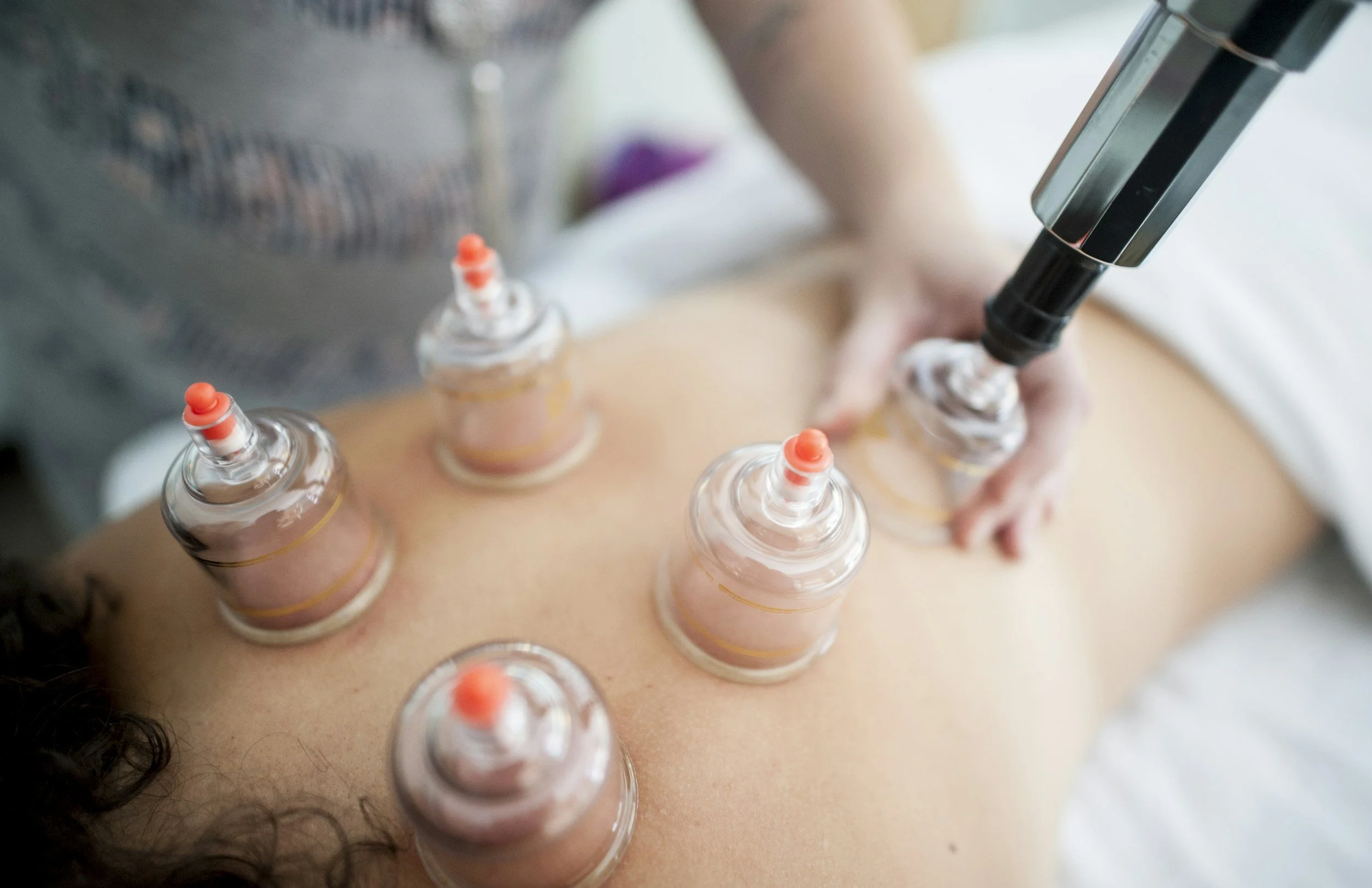
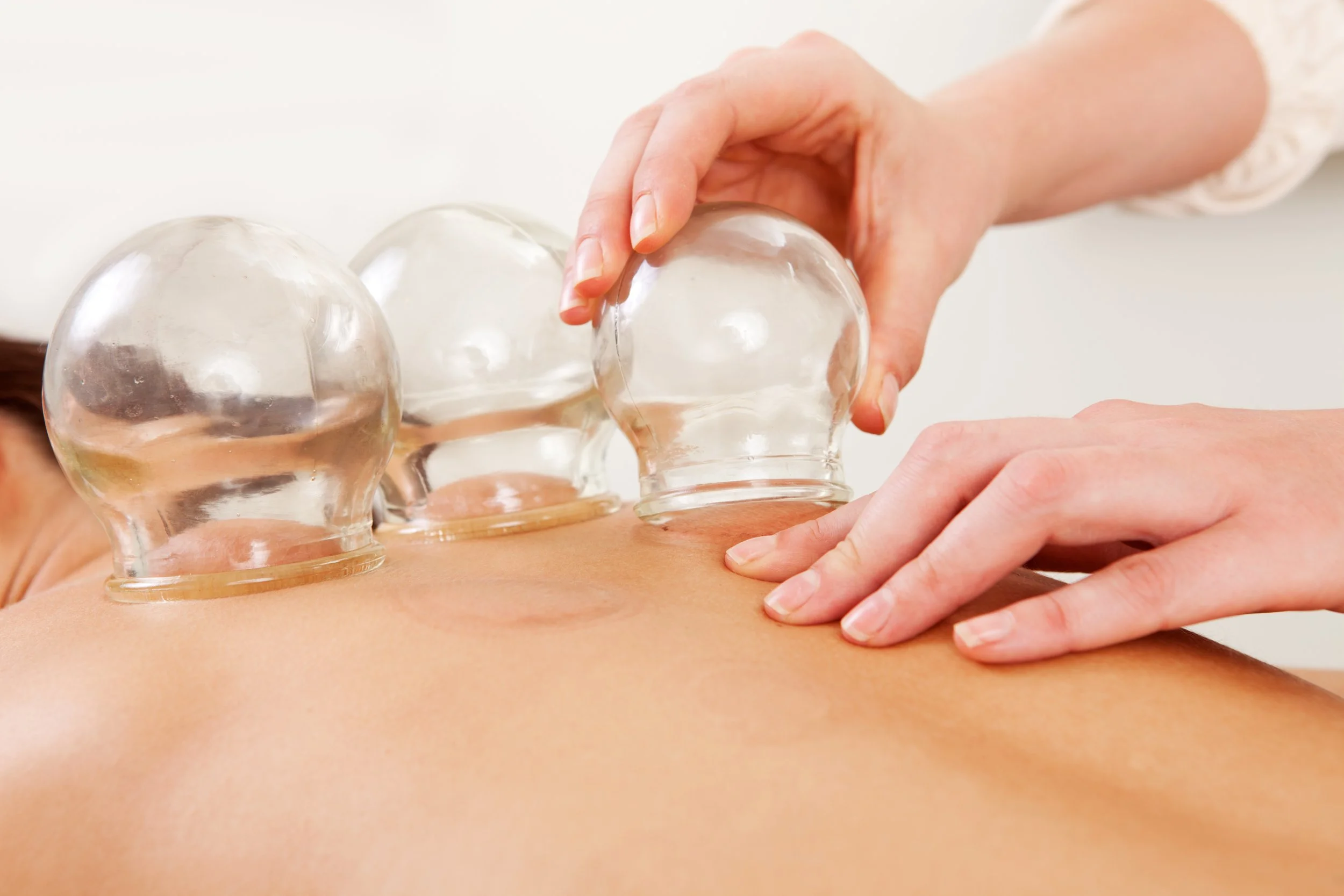
Cupping involves placing cups on the skin and creating suction within them. The cups may be left in place for several minutes or moved across the skin, depending on the type of treatment.
The suction draws the skin and underlying tissue gently into the cup. This can leave temporary circular marks or areas of discolouration, which usually fade within several days.
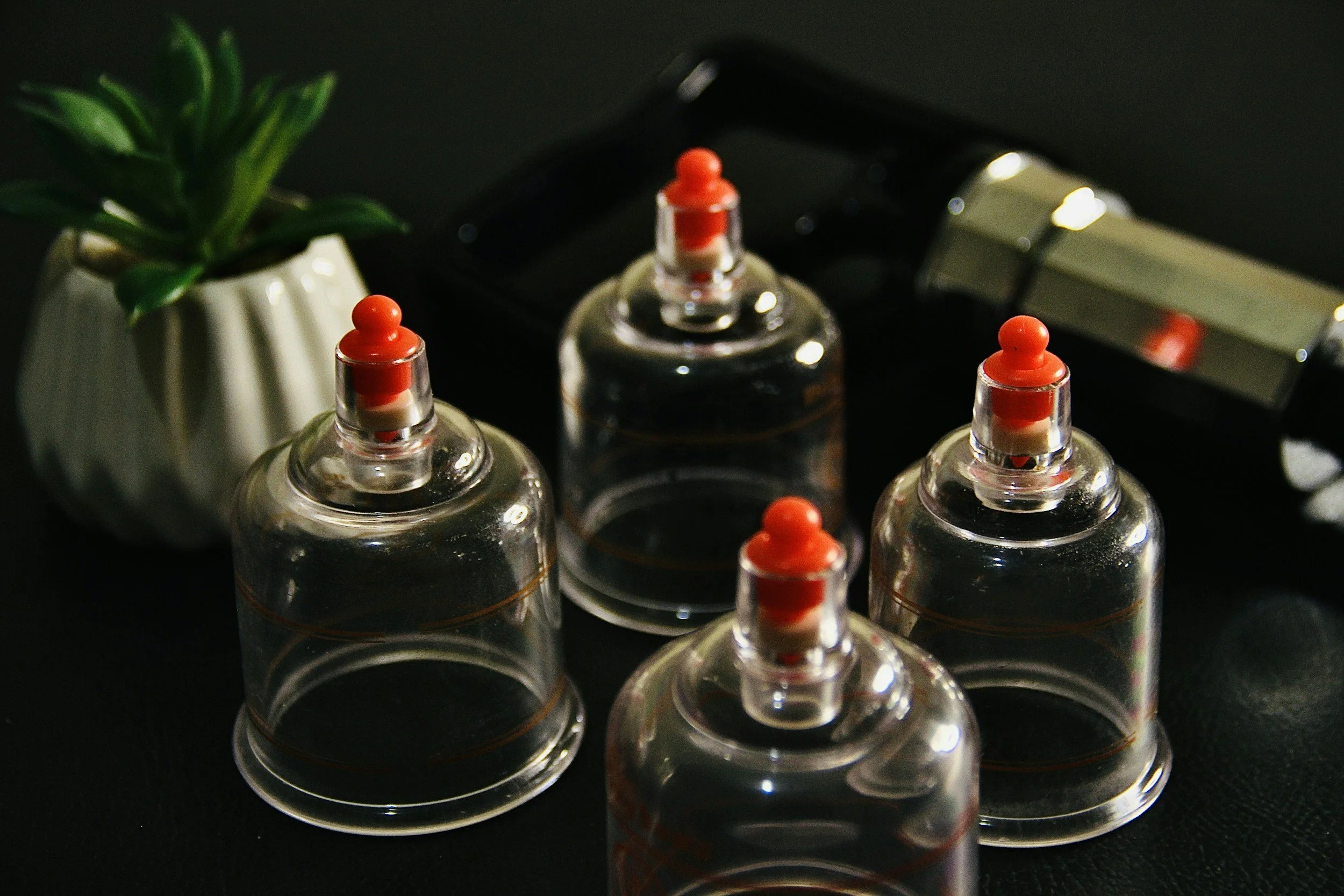
Cupping can be performed using glass or plastic cups, and is a non-invasive treatment — the skin is not pierced.
Why have cupping?
Cupping is particularly useful when I’m working with muscular tension, tightness and areas of discomfort. It can be a helpful addition to treatment when an area feels restricted or overloaded, and some people find it useful as part of recovery after physical activity.
Cupping may be used for:
muscular tension and tightness
back, neck and shoulder discomfort
muscular aches and stiffness
areas of restricted movement
supporting recovery after exercise
headaches where muscular tension may be contributing
virus’s, coughs, colds
I may use cupping alongside acupuncture or other Chinese medicine techniques, depending on what seems most appropriate for you.
How to receive cupping
Cupping is not a standalone treatment that you can book separately. It may be suggested as part of your treatment following an assessment, or you can ask me about whether cupping might be appropriate for you.
Cupping is not suitable for everyone, so I will always consider your individual health, symptoms and circumstances before using it. If it is appropriate, I'll explain the treatment and what to expect before we begin.